State Laws
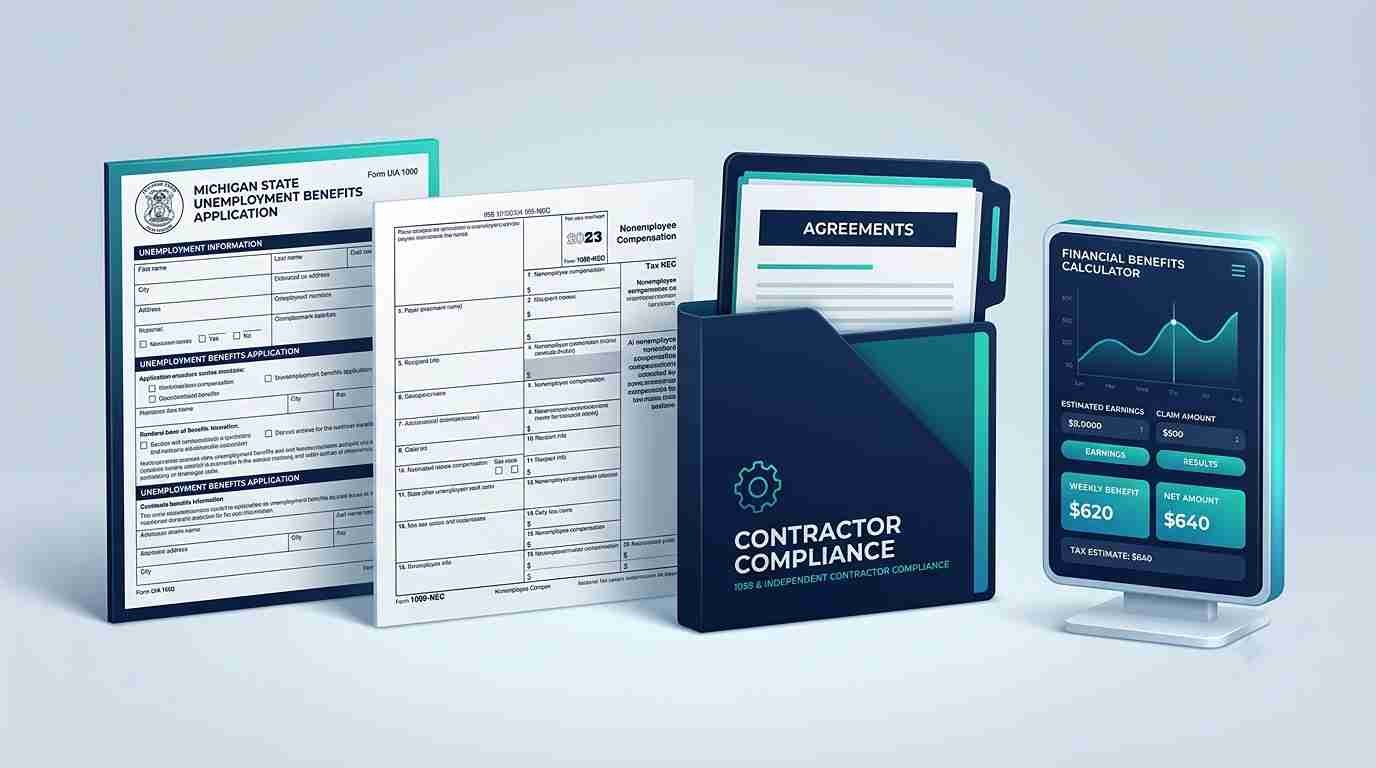
Federal 1099 rules are only half the picture. States set their own filing requirements, their own thresholds, and their own deadlines — and several states require direct filing even when the IRS already has the form. Unemployment rules for 1099 workers also vary state by state, as do workers’ compensation requirements for businesses that hire contractors. This section covers state filing requirements for 2026 and the state-specific questions readers ask most, starting with New York and Michigan unemployment coverage. State pages are updated from state tax agency sources; where a state’s rule could not be verified from an official source, the guide says so instead of guessing.




Frequently Asked Questions
Which US states have no personal income tax?
Alaska, Florida, Nevada, South Dakota, Texas, and Wyoming levy no broad-based individual income tax; Washington taxes only certain capital gains, and New Hampshire is phasing out its tax on interest and dividends.
What is economic nexus for sales tax?
The obligation to collect a state's sales tax based purely on sales volume into that state, authorized by South Dakota v. Wayfair (2018); common thresholds are $100,000 in sales or 200 transactions per state.
What is the California $800 franchise tax?
California's $800 minimum annual franchise tax, due regardless of profit, plus a graduated LLC fee.
What is a pass-through entity tax (PTET)?
An elective state-level tax on pass-through entities that addresses the $10,000 federal SALT deduction cap; more than thirty states have adopted some form of PTET.
Do I have to collect sales tax in other states?
Once a state's economic-nexus threshold is crossed, you must register, collect, and remit that state's sales tax.